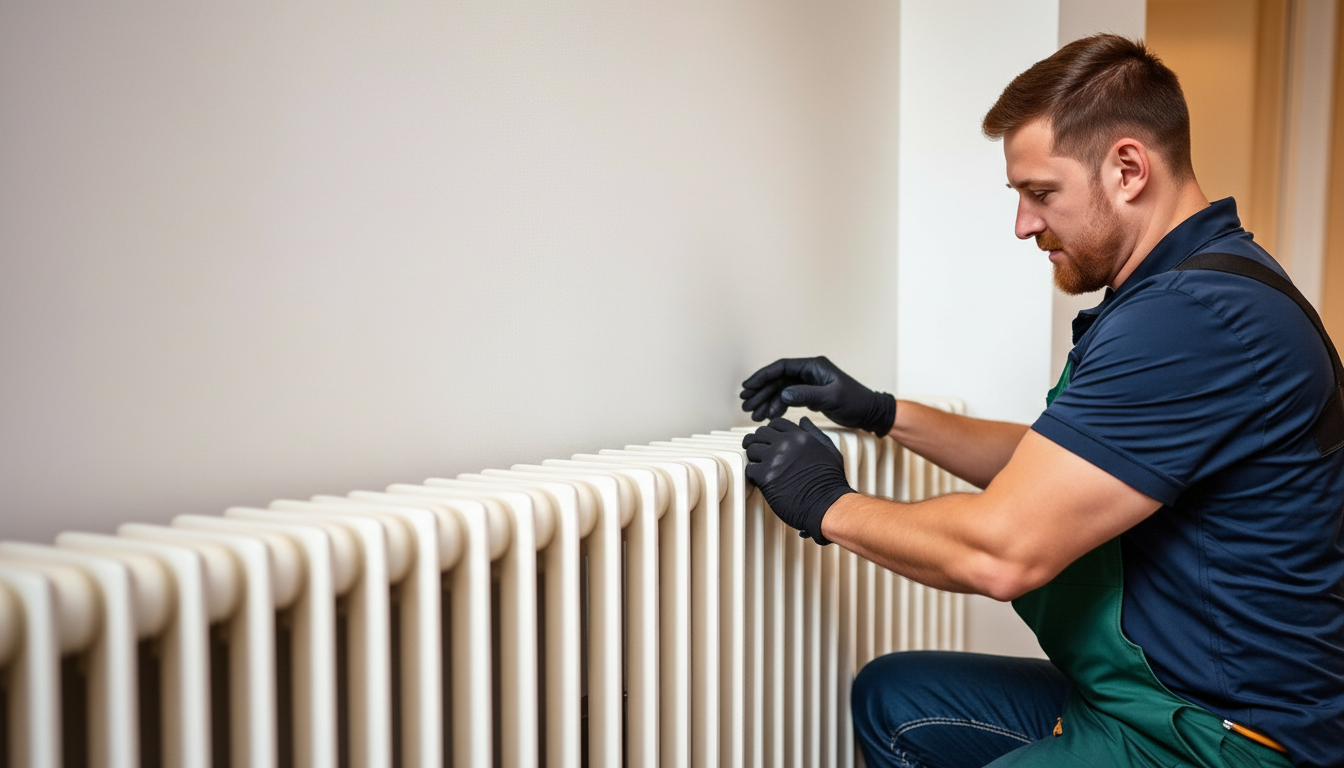
Radiator Not Heating Up: Glasgow Engineer Guide
As the damp Glasgow winter sets in, there is nothing more frustrating than turning your central heating on only to find one or more radiators staying stone cold. Whether you are living in a traditional red sandstone tenement in Shawlands or a modern detached home in Newton Mearns, heating issues are a common headache for local homeowners.
A radiator not heating up doesn’t always mean you need a brand-new boiler. Often, the issue is a simple mechanical blockage or an air pocket. This guide explains how to diagnose the problem yourself, when it is time to call for a radiator repair in Glasgow, and what you can expect to pay for professional help.
Step 1: Check the Thermostatic Radiator Valve (TRV)
The most common reason for a single radiator staying cold while the rest of the house is warm is a stuck pin in the Thermostatic Radiator Valve (TRV). This is the dial, usually numbered 1 to 5, located at the bottom of your radiator.
Inside the valve is a small metal pin that moves up and down to regulate water flow. Over the summer months, when the heating is off, this pin can often get stuck in the "closed" position due to a buildup of limescale or grit.
How to fix it:
- Unscrew the plastic head of the TRV (usually by hand or with a pair of grips).
- You will see a small metal pin sticking up.
- Try gently pressing it down with the flat side of a screwdriver. It should bounce back up easily.
- If it’s stuck down, use a pair of pliers to gently wiggle it upwards. Do not pull it forcefully, as you do not want to pull the pin out entirely.
- Replace the head and see if the radiator begins to warm up.
Step 2: Bleeding Cold Radiator Tops
If the bottom of the radiator is warm but the top is freezing cold, you almost certainly have air trapped in the system. Air rises to the highest point, creating a pocket that prevents hot water from filling the entire panel.
In Glasgow’s older tenement blocks, air can be a persistent issue if the system hasn't been properly balanced or if there is a slight leak elsewhere in the circuit.
The Bleeding Checklist:
- Turn your heating off and let the radiators cool down to avoid scalding.
- Direct a radiator key into the bleed valve at the top corner of the unit.
- Keep a rag or a small bowl underneath to catch drips.
- Turn the key anti-clockwise until you hear a hissing sound.
- Once water starts to spray out steadily, close the valve.
- Crucial: Check your boiler pressure gauge. Bleeding air drops the system pressure. If the needle is below 1.0 bar, you may need to top it up via the filling loop.
Step 3: Dealing with Cold Bottoms (Sludge and Debris)
If the top of the radiator is warm but the bottom or middle is cold, the problem is likely "Magnetite" or heating sludge. This is a black, muddy substance made of rusted iron particles from the inside of your pipes and radiators.
Because sludge is heavier than water, it settles at the bottom of the radiator, effectively blocking the flow of hot water. This is particularly common in older Glasgow homes with original steel radiators that haven't had a chemical flush in several years.
If your radiator is cold because of sludge, a simple bleed won't fix it. You will likely need a professional powerflush or a manual "off-the-wall" flush where a qualified engineer removes the radiator to cleaned it outside.
When to Call for Radiator Repair in Glasgow
If you have tried bleeding the system and checked the TRVs but the radiator remains cold, there may be a deeper hydraulic issue or a failure of the lockshield valve (the valve opposite the TRV).
In some cases, the problem isn't the radiator at all, but a failing diverter valve inside your boiler—common in older Worcester Bosch or Vaillant models—which is failing to send heat to the central heating circuit while still providing hot water to your taps.
Estimated Costs for Professional Repair (2026 Pricing)
Costs can vary depending on the age of your system and the complexity of the pipework, but these are standard ranges for Glasgow and the surrounding West of Scotland area.
| Service | Estimated Time | Estimated Price Range |
| :--- | :--- | :--- |
| TRV Replacement (Part & Labour) | 1 Hour | £80 - £130 |
| Individual Radiator Flush | 1.5 Hours | £100 - £150 |
| Full System Powerflush (up to 8 rads) | 4 - 6 Hours | £450 - £650 |
| Lockshield Valve Replacement | 1 Hour | £75 - £120 |
| System Balancing | 1 - 2 Hours | £90 - £160 |
Balancing the System
If your radiators are cold in the rooms furthest away from the boiler (often the bedrooms upstairs or at the end of a long hallway), your system might be "unbalanced."
Water follows the path of least resistance. If the radiators closest to the boiler are taking all the flow, there isn't enough pressure to reach the end of the line. An engineer can "balance" the system by adjusting the lockshield valves on every radiator to ensure an even distribution of heat across the whole property.
Hard Water and Scale in Glasgow
While Glasgow is known for its soft water sourced from Loch Katrine, which generally prevents heavy limescale buildup compared to London or the South, "magnetite" corrosion is still a major factor. Even with soft water, internal corrosion happens if "inhibitor" chemicals haven't been topped up. If you notice a radiator cold to the touch, it is often the first sign that the internal health of your heating system is declining.
Frequently Asked Questions
Why is my radiator cold even after bleeding it?
If no air or water comes out when you open the bleed valve, the valve itself may be blocked with paint or debris, or the system has lost all pressure. If water comes out but it stays cold, the issue is likely a stuck TRV or a blockage of sludge at the bottom.
Is it dangerous to have a cold radiator?
A cold radiator isn't usually dangerous, but it is inefficient. Your boiler will work harder and stay on longer to try and reach the temperature set on your wall thermostat, leading to significantly higher energy bills during the winter months.
Can I fix a cold radiator myself?
Homeowners can safely bleed radiators and check for stuck TRV pins. However, if you need to drain the system, replace valves, or handle a boiler that has lost pressure, you should contact a qualified engineer to ensure the work meets safety standards and avoids accidental flooring damage from leaks.
If you are struggling with a radiator not heating or need a reliable radiator repair in Glasgow, our team can help diagnose the issue quickly.
Contact Glasgow Plumbing & Heating today on 0141 674 6666 or visit /contact to book an engineer.
Related Articles
Heat Pump Installation in Glasgow: Complete 2025 Guide
Everything Glasgow homeowners need to know about heat pump installation, costs, grants, and whether they're suitable for Scottish homes.
Complete Boiler Servicing Guide for Glasgow Homeowners
Everything you need to know about boiler servicing in Glasgow, including costs, frequency, and what to expect from a qualified engineer.
Central Heating Efficiency: 10 Tips to Lower Your Glasgow Energy Bills
Practical advice for improving central heating efficiency in Glasgow homes, helping you stay warm while reducing energy costs.
Need Expert Help?
Our Gas Safe & NICEIC approved engineers are available 24/7 for emergencies and can usually attend routine work within 24-48 hours.